by AnthonyClaiborne | Aug 15, 2023 | News
You’ve come up with a really great barbeque sauce, better than any other you have ever tasted. How can you protect your unique creation and make sure nobody copies your delicious sauce? Can you patent it?
What a Patent Is
and What Barbeque Sauce Is
A patent is the exclusive right granted by a government to the inventor to make, use, sell and import the inventor’s patented invention. A patentable invention is any useful, new and non-obvious article of manufacture, apparatus or machine, process or composition of matter. A finished barbeque sauce is simply a composition of matter. The question is whether the sauce is patentable.
A barbeque sauce is certainly useful. It adds flavor to and enhances the enjoyment of foods, particularly barbequed foods.
Your barbeque sauce is also certainly new. To the best of your knowledge, nobody has made a barbeque sauce anywhere near as good as yours.
The problem with patenting your sauce has to do with obviousness. You have made your sauce by combining ingredients which, even if they are exotic, are known as food ingredients to those in the culinary arts. You may have prepared the combination of ingredients in your sauce by some process, such as boiling, roasting, steaming, and so on. But these processes also are known to persons in the culinary arts. What likely makes your sauce unique is the proportions of ingredients that you have used to get just the right balance you were looking for in the sauce. From a patenting perspective, though, obtaining results using known methods varying proportions of known ingredients is regarded as obvious. Sadly, your barbeque sauce, like most recipes for almost any food, is probably not patentable because it is obvious from the perspective of patent law.
All is no lost, however! Recipes for foods can be protected with intellectual property other than patents. You don’t have to disclose the exact proportions of ingredients you used in your tasty sauce. If you guard the proportions as confidential, you can protect the intellectual property in your recipe as a trade secret. Think of the formula for Coca Cola, or the special blend of 11 herbs and spices in KFC and you can see the power of trade secret protection for recipes.
Further, you can protect a proprietary recipe with branding and trademark. While there are many hot sauces out there, everybody knows Tabasco® sauce. Associating a strong and unique mark with your sauce will help distinguish it in the marketplace and protect you from competition by imitators.
To see what your options are to protect your fantastic barbeque sauce, consult with an intellectual property attorney for further guidance.
by AnthonyClaiborne | Jun 15, 2022 | About Trademarks
If you have your branded products manufactured in China, you may wish to register your trademark in China even if you don’t sell it there.
When a branded product is reviewed by Chinese Customs for export from China, the Customs officials will check to see if the brand is a registered mark in China. If the brand is a registered mark, Customs may require an “authorization letter” from the owner of the Chinese trademark registration.
Chinese trademark squatters will seek out a U.S. branded product that is exported from China and fraudulently obtain a Chinese trademark registration for the brand.
When the U.S. brand owner tries to export their product from China, Customs may halt the export and demand an authorization letter. The squatter will offer to give the brand owner the letter, for a price
We recommend to all our clients who have branded goods manufactured in China that they obtain a Chinese trademark registration for their brands, so that squatters cannot extort them at Customs.
Through our associate partners at Henlv IP, Beijing, our firm offers the full range of intellectual property services, including trademark registration. If you currently or plan to have goods manufactured in China, contact us for a free consultation.
by AnthonyClaiborne | Jan 17, 2022 | About Patenting
An inventor may wish to file a provisional application if the inventor is not ready to enter into the regular examination process, typically because of time or money constraints. A provisional application establishes a filing date at a lower cost for a first patent application filing in the United States and allows the term “Patent Pending” to be applied to the invention.
A provisional patent application serves only to establish the filing date for the patent application and automatically becomes abandoned after one year. The U.S. Patent Office does not examine a provisional application and such an application cannot become a patent. An applicant must submit the non-provisional application within one year of submitting the provisional application in order to possibly receive the benefit of the provisional application’s filing date.
Claims are not required in a provisional application. Our firm’s provisional patent applications generally include exemplary claims, however, to serve as examples of the invention for any later filed non-provisional applications.
At least one drawing is required in a provisional patent application. While it is not necessary to have the drawing made by an experienced patent draftsman, preparing a formal drawing for a provisional filing can save time and expense when a non-provisional patent application is filed later.
The filing fee for a provisional patent application is modest (as low as $75 for an individual inventor as of January 2022). Legal fees for preparation are also lower, but extra care paid to preparation can reduce time and fees for the later non-provisional application.
As an incentive for engaging us, our firm discounts your fee for a later filed non-provisional application by the fee you paid us for your prior provisional application.
by AnthonyClaiborne | Oct 23, 2021 | About Patenting
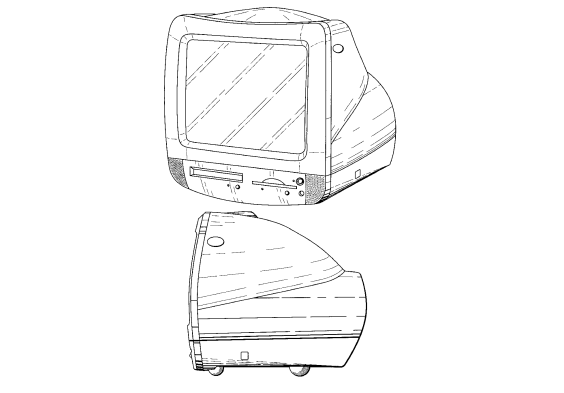
A design patent relates to a new, useful and ornamental article of manufacture. When most people think of a patent, they think of a utility patent directed to a technological invention: an article, apparatus, process or composition of matter that is useful, new and non-obvious. A design patent is a different kind of patent.
Just as with a technology utility patent, the patented thing must be new and non-obvious. But it also must be ornamental. It must embody an ornamental design or reflect ornamental or aesthetic judgment beyond that required to make an efficient, functioning article.
For example, the well-known Bic ballpoint pen is an article of manufacture. It incorporates various ornamental features, such as a transparent body of six-sided cross-section, a gold plastic tip assembly, an internal translucent tube for holding the ink, and an end cap whose color is that of the ink contained in the pen. In these respects, the pen incorporates various elements of aesthetic judgment and therefore could be protected by a design patent.
The degree of aesthetic judgment required to confer ornamentation on the design of a functional article of manufacture, however, is not terribly high.
While the duration of a technology utility patent is generally 20 years from the date the patent application was filed, the duration of a design patent is 14 years from the date the patent has issued. Also, while maintenance fees (payable at 3, 7 and 11 years after issue) are required to keep a utility patent from lapsing, no additional fees are due for a design patent after it issues.
The scope of protection for a design patent is different from the scope of protection for a technology patent. A design patent prevents others from making articles of manufacture that have the same (or equivalent) ornamental features as the depicted invention. Both utility and design patents enable their owners to place a patent marking on articles of manufacture that practice the patented invention, which significantly discourages competitors from attempting to market similar articles without a license.
If embodiments of your invention have ornamental aspects, consider applying for a design patent to further protect your intellectual property.

Recent Comments